
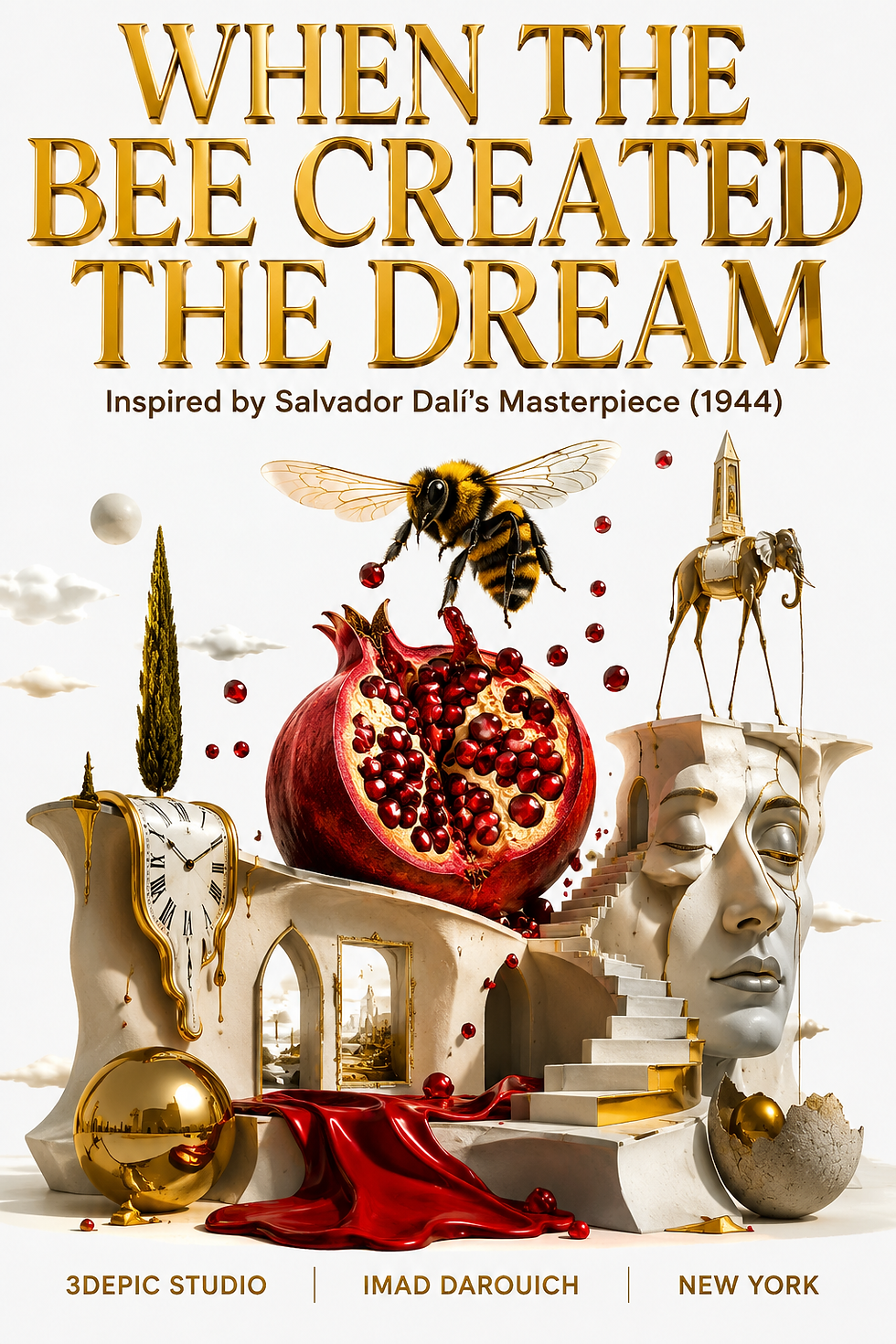
WHEN THE BEE CREATED THE DREAMInspired by Salvador Dalí's Masterpiece (1944)
- IMAD DAROUICH

- Jul 7
- 15 min read
WHEN THE BEE CREATED THE DREAM
Inspired by Salvador Dalí's Masterpiece (1944)
حلم
تسببه رحلة نحلة حول رمانة قبل الاستيقاظ
Dream
Caused by the Flight of a Bee Around a Pomegranate a Second Before Awakening
(1944)
عماد درويش — نيويورك
Imad Darouich— New York
المقدّمة
أنا عماد درويش، معماريّ سوري أؤمن أن الحلم هو الطابق العلوي من العمارة الإنسانية. I am Imad Darouich, a Syrian architect who believes that dreams are the upper floor of human architecture.
حين تأملت لوحة سلفادور دالي «حلم تسببه رحلة نحلة حول رمانة قبل الاستيقاظ» (1944)، وجدت نفسي أمام مشهدٍ يربط بين الهشاشة والدهشة: امرأة نائمة، رمانة صغيرة، نحلة تحلّق، ونمور يندفعون من جوف السمكة، كأن الحلم يتفجّر في لحظةٍ واحدة قبل اليقظة. When I contemplated Dalí’s “Dream Caused by the Flight of a Bee Around a Pomegranate a Second Before Awakening” (1944), I found myself before a scene tying fragility to wonder: a sleeping woman, a small pomegranate, a bee hovering, and tigers leaping out of a fish’s mouth, as if the dream explodes in one instant before awakening.
هذه اللوحة ليست حلم امرأة وحسب، بل حلم العالم كلّه، حيث تفجّر لحظة صغيرة — طنين نحلة أو سقوط رمانة — سلسلة كاملة من الصور، المخاوف، والرغبات. This painting is not only the dream of a woman, but of the whole world, where a small instant — the buzz of a bee or the fall of a pomegranate — triggers an entire chain of images, fears, and desires.
وهذه الملحمة التي أكتبها عنها ليست وصفًا لمشهد، بل عبور بين الحلم واليقظة، بين الرمّانة كرمز للخصب والدم، والنمر كرمز للخطر، والمرأة كرمز للذاكرة النائمة في حضن دمشق. And this epic I write about it is not a description of a scene, but a passage between dream and awakening, between the pomegranate as a symbol of fertility and blood, the tiger as a symbol of danger, and the woman as a symbol of memory asleep in the lap of Damascus.
امرأة نائمة على صخرة عائمة. A woman sleeps upon a floating rock.
جسدها ممدود كقصيدة بيضاء. Her body stretched like a white poem.
السكينـة تملأ ملامحها، كأنها لا تعرف الحرب. Serenity fills her features, as if she has never known war.
لكن اللوحة تهمس: حتى في النوم، يترصّدنا الخطر. But the painting whispers: even in sleep, danger lurks.
ذراعها تتدلى ببراءة، كزهرة غافية على حافة نهر. Her arm dangles innocently, like a flower dozing on the river’s edge.
حولها السماء مفتوحة ككتاب أزرق. Around her the sky is open, like a blue book.
لا جدران، لا أبواب، فقط فضاء يسبح فيه الحلم. No walls, no doors, only space where dream drifts.
هذه المرأة هي بداية الحلم، وباب اللوحة. This woman is the beginning of the dream, the doorway of the canvas.
أراها كدمشق القديمة حين تنام بعد ضجيج النهار. I see her as Old Damascus when it sleeps after the noise of day.
واجهة هادئة، لكن في الداخل تنهض صور، وأصوات، وأسرار. A quiet façade, yet inside rise images, voices, and secrets.
رمانة صغيرة، تكاد تسقط من يد الغيب. A small pomegranate, almost falling from the hand of the unseen.
حمراء كقلبٍ مفتوح، كقطرة دم متوهّجة. Red like an open heart, like a glowing drop of blood.
بجانبها نحلة واحدة، تدور، تطنّ، تحرّك الهواء. Beside it a single bee, circling, buzzing, stirring the air.
ما أضعفها! وما أعظم أثرها! How fragile it is! And how great its effect!
طنينٌ خفيف يهزّ عرش الحلم. A faint buzz shakes the throne of the dream.
لحظة صغيرة تصير عاصفة من الصور. A small moment becomes a storm of images.
كما أن رصاصة واحدة تكفي لإشعال حرب. Just as a single bullet can ignite a war.
الرمانة ثمرة خصب، لكنها أيضًا ثمرة دم. The pomegranate is a fruit of fertility, but also a fruit of blood.
في دمشق كنّا نكسرها في الأعياد، فتتناثر حباتها كضحكات الأطفال. In Damascus we broke it open on feasts, its seeds scattering like children’s laughter.
لكن في الحرب، نفس الحبات تسقط كدموع حمراء على التراب. But in war, the same seeds fall like red tears upon the soil.
الرمانة في اللوحة هي ذاكرة مزدوجة: فرح ودم، حياة وخطر. The pomegranate in the painting is a double memory: joy and blood, life and danger.
من جوف السمكة يخرج النمر. From the belly of the fish leaps the tiger.
فم مفتوح، أنياب لامعة، زئير مجمّد في الهواء. Mouth agape, teeth gleaming, a roar frozen in the air.
ثم يتبعه نمر آخر، أكثر ضراوة، أكثر عطشًا للدم. Then follows another tiger, fiercer, thirstier for blood.
السمكة التي ترمز إلى الصمت، تلد فجأة وحشًا. The fish, symbol of silence, suddenly gives birth to a beast.
كأن الحلم لا يعرف منطقًا، بل يعرف الانفجار وحده. As if the dream knows no logic, only eruption.
المرأة ما زالت نائمة، لا ترى الفم المفتوح فوقها. The woman still sleeps, unaware of the gaping maw above her.
النمور هي مخاوفها المخفية، تنهض من لاوعيها كما ينهض الوحش من البحر. The tigers are her hidden fears, rising from her unconscious as the beast rises from the sea.
كم مرة في دمشق حلمنا ببحر هادئ، فخرج منه نمر من دخان الحرب؟ How many times in Damascus did we dream of a calm sea, only for a tiger of war-smoke to emerge?
كم مرة وُلد الوحش من بطن الصمت؟ How many times was the beast born from the belly of silence?
دالي يضع في اللوحة سرّ الحلم: أن الخطر يولد دائمًا من رحم الأمان. Dalí places in the painting the secret of dreams: that danger is always born from the womb of safety.
فوق كل هذه الصور يلمع رمح. Above all these images, a spear gleams.
معدن بارد، مستقيم، يهبط ببطء نحو الجسد الغافي. Cold metal, straight, descending slowly toward the sleeping body.
كأنه الزمن نفسه، لا يتوقف ولا يرحم. As if it were time itself, relentless and unceasing.
النمور قد تخيف، لكن الرمح يقتل. The tigers may terrify, but the spear kills.
إنه لحظة الاستيقاظ، الصدمة التي تقطع الحلم. It is the instant of awakening, the shock that severs the dream.
دالي يضعنا أمام ثانية واحدة: Dalí places us before a single second:
بين النوم واليقظة، بين الصورة والفعل، بين الخوف والواقع. Between sleep and awakening, between image and act, between fear and reality.
المرأة ما زالت في عالمها، لكن الرمح على وشك أن يمزّق الغلاف الرقيق للحلم. The woman remains in her world, but the spear is about to pierce the fragile membrane of the dream.
في دمشق أيضًا كنّا نعيش تحت رماح غير مرئية. In Damascus too we lived under invisible spears.
طنينٌ صغير — كصوت طائرة في السماء — يتحوّل في لحظة إلى رمح يسقط على بيت. A small buzz — like the sound of a plane in the sky — turns in an instant into a spear falling on a house.
الرمح عند دالي هو رمز: أن كل حلم يحمل داخله سلاحًا يوقظنا. The spear in Dalí is a symbol: that every dream carries within it a weapon to awaken us.
الماء الأزرق يمتد بلا حدود. The blue water stretches without limits.
أفق مفتوح كمرآة السماء. An open horizon like the mirror of the sky.
لا أمواج، لا رياح، فقط صمتٌ مائي. No waves, no winds, only watery silence.
هذا البحر ليس بحرًا، بل عقلٌ حالم. This sea is not a sea, but a dreaming mind.
تطفو فوقه المرأة، والرمانة، والنمور، والرمح. Upon it float the woman, the pomegranate, the tigers, the spear.
كأن الحلم لوحة مرسومة فوق صفحة ماء. As if the dream were a painting upon the page of water.
البحر عند دالي فضاء داخلي، لا جغرافيا. The sea in Dalí is an inner space, not geography.
إنه اللاوعي وقد انفتح مثل محيطٍ بلا شواطئ. It is the unconscious, opened like an ocean without shores.
أتذكر بحيرة زرزر قرب دمشق، كيف كانت السماء تذوب في مائها. I recall Lake Zarzar near Damascus, how the sky melted into its water.
كنتُ أرى في صفائها وجوهًا لم تولد بعد، وأصواتًا لم تُكتب. In its clarity I saw faces not yet born, and voices not yet written.
الماء هنا هو الذاكرة السائلة، تحفظ وتخفي في الوقت نفسه. The water here is liquid memory, preserving and concealing at once.
دالي جعل البحر خلفية، لكنه في الحقيقة هو المسرح كله. Dalí made the sea a background, but in truth it is the entire stage.
السمكة عالقة في الهواء، فمها مفتوح. The fish hangs in the air, its mouth open.
ليست طريدة ولا صيّادة، بل باب للحلم. Neither prey nor hunter, but a door to the dream.
من جوفها يخرج النمر، مخالب مفترسة تُمزّق الصمت. From its belly leaps the tiger, claws tearing through silence.
كيف يولد الوحش من بطن الصمت؟ How can the beast be born from the belly of silence?
السمكة رمز الماء، رمز الحياة. The fish is the symbol of water, the symbol of life.
لكن عند دالي، الحياة تلد الخطر. But in Dalí, life gives birth to danger.
الصمت نفسه يمكن أن يصبح صرخة. Silence itself can become a scream.
في طفولتي بدمشق، كنت أرى السمك في الأسواق، عيونها مفتوحة حتى بعد الموت. In my childhood in Damascus, I saw fish in the markets, their eyes open even after death.
كنت أشعر أن في داخلها أسرارًا لا نعرفها. I felt that within them were secrets we did not know.
هنا، في اللوحة، السر يخرج على شكل نمر. Here, in the painting, the secret emerges as a tiger.
كأن دالي يقول: كل كائن بريء يخفي في داخله وحشًا محتملًا. As if Dalí were saying: every innocent creature hides within it a potential beast.
الحلم يكشف هذا التناقض: السمكة ماء، والنمر نار. The dream reveals this contradiction: the fish is water, the tiger fire.
المرأة ما زالت غافية. The woman remains asleep.
حولها ينهض كل شيء: الرمانة، النحلة، السمكة، النمور، الرمح. Around her, everything rises: the pomegranate, the bee, the fish, the tigers, the spear.
لكن وجهها ساكن، كقمر في صمت الليل. But her face is still, like a moon in the silence of night.
إنها مركز العاصفة، الهدوء الذي يلتف حوله الخطر. She is the eye of the storm, the calm around which danger coils.
لا تدري أن لحظة صغيرة ستوقظها. She does not know that a small moment will awaken her.
أن الطنين قد يصبح زئيرًا، وأن البراءة قد تتحوّل سكينًا. That the buzz may become a roar, and innocence turn into a blade.
الجسد العاري هنا ليس ضعفًا، بل مرآة مكشوفة. The naked body here is not weakness, but an unveiled mirror.
كل صورة في الحلم تُسقط ظلها عليه. Every image in the dream casts its shadow upon it.
كم يشبه نومها نوم دمشق قبل أن ينفجر الخراب. How much her sleep resembles Damascus before ruin exploded.
مدينة ناعسة، تنام على وسادة التاريخ، ولا تدري أن رمح الحرب يقترب. A drowsy city, sleeping on the pillow of history, unaware that the spear of war approaches.
النحلة صغيرة، لا يكاد يُرى جناحها. The bee is small, its wing barely visible.
لكنها تهزّ فضاء الحلم كما تهزّ قطرة ماء سطح بحيرة ساكنة. Yet it shakes the space of the dream as a drop of water shakes the surface of a still lake.
طنينها ليس صاخبًا، إنه خفيف، متردّد، لكنه عميق. Her buzz is not loud, it is faint, hesitant, yet profound.
هذا الطنين هو الإبرة الأولى التي تخترق غشاء النوم. This buzz is the first needle that pierces the membrane of sleep.
منه يولد الرمانة، ومنه تقفز النمور، ومنه يلمع الرمح. From it comes the pomegranate, from it leap the tigers, from it gleams the spear.
كل الكابوس يبدأ بذبذبة صغيرة، بجرس خفيّ. Every nightmare begins with a tiny vibration, a hidden chime.
كأن دالي يهمس لنا: الشرّ العظيم لا يولد من انفجار، بل من لحظة هامسة. As if Dalí whispers to us: great evil is not born of explosion, but of a whispering moment.
في دمشق، كان الطنين صوت الطائرات من بعيد. In Damascus, the buzz was the sound of distant airplanes.
صوتٌ صغير في السماء، لكن تحته كانت تنام بيوت كاملة. A small sound in the sky, yet beneath it entire homes slept.
لحظة طنين، ثم لحظة سقوط، ثم لحظة استيقاظ لا عودة بعدها. A moment of buzzing, then a moment of falling, then an awakening from which there is no return.
النحلة في لوحة دالي هي العالم كله حين يهتزّ من لمسة صغيرة. The bee in Dalí’s painting is the whole world trembling from a small touch.
رمزٌ للقوة الهائلة التي يحملها الضعيف، وللصدمة التي يصنعها الهامشي. A symbol of the immense power borne by the fragile, and of the shock created by the marginal.
هي الشرارة، هي الفجر، هي اليد التي تقرع جرس الكابوس. She is the spark, the dawn, the hand that rings the bell of the nightmare.
الحلم لا يسير بخطوات هادئة. The dream does not move in gentle steps.
إنه برق يشتعل، صورة تولد من صورة. It is lightning that ignites, an image born of an image.
الرمانة أولًا: ثمرة صغيرة، حمراء كالدم. The pomegranate first: a small fruit, red like blood.
تفتح فمها، ومن بذورها يخرج ماء يتشكل سمكة. It opens its mouth, and from its seeds pours water that becomes a fish.
السمكة تصمت لحظة، ثم تنفجر منها مخالب ونمور. The fish is silent a moment, then out of it explode claws and tigers.
النمور تركض فوق الهواء، لا أرض تحتها. The tigers run across the air, with no ground beneath them.
زئيرها يتردد في صمت اللوحة، كأنه صدى داخل جمجمة نائمة. Their roar reverberates in the silence of the canvas, like an echo inside a sleeping skull.
ثم يلمع الرمح: مستقيم، بارد، يهبط ببطء نحو الجسد الغافي. Then the spear gleams: straight, cold, descending slowly toward the sleeping body.
لحظة واحدة فقط تربط الكل: رمانة، نحلة، سمكة، نمر، رمح. One single instant connects them all: pomegranate, bee, fish, tiger, spear.
كأن العقل البشري في نومه يصنع متاهة من الصور، كل باب فيها يقود إلى باب آخر. As if the human mind in sleep builds a labyrinth of images, each door leading to another.
أتذكر أحلام دمشق حين كان الرصاص برقًا، يولد من صوت صغير، ثم يتحوّل إلى كابوس كامل في ثانية. I recall Damascus dreams when bullets were lightning, born from a small sound, then turning into a full nightmare in a second.
الحلم عند دالي ليس رواية، بل عاصفة برق: كل صورة تضيء لحظة، ثم تذوب لتلد ما بعدها. The dream in Dalí is not a story, but a lightning storm: each image flashes for an instant, then melts to give birth to the next.
المرأة ليست مجرّد نائمة. The woman is not merely asleep.
إنها الجسد الذي يكتب الحلم فوقه نفسه. She is the body upon which the dream writes itself.
كل صورة — الرمانة، النحلة، السمكة، النمور، الرمح — لا وجود لها إلا بظلّها على بشرتها. Every image — the pomegranate, the bee, the fish, the tigers, the spear — exists only as its shadow upon her skin.
هي الأرض البيضاء التي ينبت منها كل خيال. She is the white ground from which every fantasy sprouts.
ذراعها الممدودة كصفحة مفتوحة تنتظر الحبر. Her extended arm is like a page awaiting ink.
وجهها المغمض مثل نافذة لا ترى، لكنها تعكس كل شيء. Her closed face like a window that does not see, yet reflects everything.
الجسد في اللوحة ليس خامدًا، بل هو قلب العاصفة. The body in the painting is not inert, but the heart of the storm.
كأنه مسرح مفتوح، تتصارع فوقه الصور كما تتصارع الجيوش في مدينة منكوبة. As if it were an open stage, where images battle like armies in a ruined city.
كم من جسد نام في دمشق، وصار في لحظة مسرحًا للحرب، للحلم المكسور. How many bodies slept in Damascus, and in an instant became a stage for war, for a broken dream.
الجسد النائم يعلّمنا: لا أحد يملك حصانة من الصور التي تولد في داخله. The sleeping body teaches us: no one is immune to the images born within.
الرمانة ليست فاكهة فقط. The pomegranate is not merely a fruit.
إنها قبة صغيرة، تحتضن بذورًا لا تُحصى. It is a small dome, cradling countless seeds.
فيها سرّ التعدد، سرّ الخصب، سرّ الدم. In it lies the secret of multiplicity, fertility, blood.
قدموها في الأساطير قربانًا للآلهة. In myths it was offered as a sacrifice to the gods.
وفي دمشق، كانت على موائد العيد، رمزًا للبركة والفرح. In Damascus, it lay on feast tables, a symbol of blessing and joy.
لكنها في الحلم تسقط كجرس أحمر يعلن الخطر. But in the dream it falls like a red bell announcing danger.
الرمانة عند دالي تفتح أبواب الذاكرة الكونية. In Dalí, the pomegranate opens the doors of cosmic memory.
منها يخرج الماء، ومنها تخرج السمكة، ومنها يولد الوحش. From it flows water, from it emerges the fish, from it the beast is born.
هي بذرة الحياة التي تتحوّل أيضًا إلى بذرة موت. It is the seed of life that also becomes the seed of death.
كأنها دمشق نفسها: مدينة الرمان والياسمين، مدينة الدم والخراب. As if she were Damascus herself: city of pomegranates and jasmine, city of blood and ruin.
الرمانة تخبرنا أن كل ثمرة تحمل في قلبها مفارقة: لذّة ومرارة، بداية ونهاية. The pomegranate tells us that every fruit carries in its heart a paradox: sweetness and bitterness, beginning and end.
الزمن في اللوحة ليس خطًّا مستقيمًا. Time in the painting is not a straight line.
إنه لحظة متجمّدة، ثانية مشدودة كوتر قوس. It is a frozen instant, a second stretched like a bowstring.
كل الصور — الرمانة، السمكة، النمور، الرمح — تحدث في آن واحد. All the images — the pomegranate, the fish, the tigers, the spear — occur simultaneously.
كأن العالم كله انضغط في نبضة واحدة. As if the whole world compressed into a single pulse.
الحلم لا يعرف الساعات، يعرف فقط الشرارة. The dream knows no hours, it knows only the spark.
شرارة صغيرة تفجّر سلسلة لا نهائية من الصور. A tiny spark detonates an endless chain of images.
الزمن في الحلم مثل موجة، تنهض ثم تختفي، لكنها تترك أثرها في الرمال. Time in the dream is like a wave, rising then vanishing, yet leaving its trace upon the sand.
هنا، الثانية الواحدة تصبح أبدية. Here, the single second becomes eternity.
وهنا، الأبدية نفسها تختصر في ثانية. And here, eternity itself is condensed into a second.
أتذكر ليالي دمشق تحت القصف: اللحظة الواحدة كانت تكفي لتفصل بين حياة وموت، بين بيت قائم وركام. I remember Damascus nights under bombardment: one instant was enough to separate life from death, a standing home from rubble.
الزمن عند دالي مرآة مزدوجة: يعلّمنا أن الأبدية قد تُختصر في رمشة عين، وأن رمشة العين قد تحتوي الأبدية كلها. Time in Dalí is a double mirror: teaching us that eternity may be condensed into a blink, and a blink may contain eternity entire.
الحلم ليس هروبًا من الواقع. The dream is not an escape from reality.
بل هو مرآة تُظهر ما نخفيه في يقظتنا. It is a mirror that reveals what we conceal in wakefulness.
المرأة النائمة ليست وحدها؛ إنها نحن جميعًا. The sleeping woman is not alone; she is all of us.
كل واحد يحمل في داخله نحلة صغيرة، طنينها يوقظ كوابيسه. Each one carries within a small bee, its buzz awakening his nightmares.
النمور ليست من اللوحة، بل من ذاكرتنا. The tigers are not from the canvas, but from our memory.
الرمح ليس رمزًا فقط، إنه ظلّ السيف الحقيقي الذي يسقط كل يوم. The spear is not only a symbol, it is the shadow of the real sword that falls each day.
هنا يختفي الحدّ بين الحلم والواقع. Here the boundary between dream and reality dissolves.
كأن اللاوعي ليس مسرحًا خياليًا، بل مسرح الحقيقة نفسها، من دون أقنعة. As if the unconscious were not a stage of fantasy, but the stage of truth itself, without masks.
في دمشق، كثير من الأحلام لم تكن كوابيس، بل كانت تسجيلًا حرفيًا للغد القريب. In Damascus, many dreams were not nightmares, but literal records of the coming tomorrow.
كأن الحلم كان جريدة مكتوبة بالنار، نقرأها في الليل ونستيقظ عليها في الصباح. As if the dream were a newspaper written in fire, read at night and awakened to in the morning.
الحلم عند دالي يعلّمنا أن الحقيقة قد تلبس ثوب الخيال، لكن جراحها تبقى واقعية تمامًا. Dream in Dalí teaches us that reality may wear the dress of fantasy, but its wounds remain utterly real.
دمشق مدينة الحلم واليقظة معًا. Damascus is a city of both dream and awakening.
تنام على وسادة ياسمين، وتستيقظ على رمح. She sleeps upon a pillow of jasmine, and awakens to a spear.
كل حجر فيها رمانة قديمة، كل نافذة سمكة تلد وحشًا من الدخان. Every stone in her is an ancient pomegranate, every window a fish birthing a beast of smoke.
أطفالها يركضون في الأزقة كطيور، لكن طنينًا صغيرًا في السماء يكفي ليحوّل الضحك إلى صمت. Her children run in the alleys like birds, but a faint buzzing in the sky is enough to turn laughter into silence.
دمشق، مثل المرأة في لوحة دالي، تبدو غافية، مطمئنة، لكنها دائمًا تحت تهديد الرمح. Damascus, like the woman in Dalí’s painting, appears asleep, serene, yet always under the threat of the spear.
الرمانة التي كانت رمز العيد على موائدها، صارت رمزًا للدم على أرصفتها. The pomegranate that once symbolized feasts upon her tables has become a symbol of blood upon her pavements.
كل حلم فيها كان يحمل نمرًا مختبئًا، يخرج فجأة من بطن الصمت. Every dream within her carried a hidden tiger, suddenly leaping from the belly of silence.
ومع ذلك، تبقى دمشق مدينة الأحلام. And yet, Damascus remains a city of dreams.
مدينة تعرف أن الطنين لا يقتل، بل يذكّرها بأنها ما زالت حية، ما زالت قادرة على أن ترى الحلم حتى في قلب الكابوس. A city that knows the buzz does not kill, but reminds her she is still alive, still able to see the dream even in the heart of the nightmare.
في النهاية، يبقى الحلم معلّقًا بين جناحي نحلة. In the end, the dream remains suspended between the wings of a bee.
صغير، هشّ، لكنه يحمل مدينة بكاملها. Small, fragile, yet carrying an entire city.
الرمانة تتفتّح مثل قلبٍ ينزف ومع ذلك يبتسم. The pomegranate bursts open like a heart bleeding, yet smiling.
النمور تزأر ثم تتلاشى كأشباح في ضوء الفجر. The tigers roar and then dissolve like ghosts in the dawn light.
الرمح يهبط ببطء، لكنه يتوقف عند حافة اليقظة. The spear descends slowly, but halts at the edge of awakening.
المرأة تستيقظ، تحمل معها ظلّ الحلم، كمن يحمل وعاء ماء انسكب منه نصفه. The woman awakens, carrying with her the shadow of the dream, as one carries a vessel half-spilled.
الحلم لم يمت، بل تحوّل إلى ذكرى. The dream has not died, but transformed into memory.
وهكذا، تصبح الذاكرة هي الحلم الثاني، الحلم الذي لا ينكسر. And thus, memory becomes the second dream, the dream unbroken.
دمشق أيضًا تستيقظ، لكنها لا تفقد حلمها. Damascus too awakens, yet does not lose her dream.
مدينة طُعنت ألف مرة، ومع ذلك ما زالت تحلم بالياسمين، بالماء، بالأبواب الخشبية التي تفتح على ضحكة طفل. A city stabbed a thousand times, yet still dreaming of jasmine, of water, of wooden doors opening to a child’s laughter.
هذه هي الملحمة: أن الحلم قد يُهدّد، قد يُطعن، لكنه لا يموت. This is the epic: that the dream may be threatened, may be pierced, but never dies.
ويبقى الحلم حيًّا، حتى لو أيقظته نحلة صغيرة. And the dream remains alive, even if awakened by a tiny bee.
وتبقى دمشق، مثل المرأة في اللوحة، مدينةً نائمة على جراحها، لكن عيناها دائمًا مفتوحتان على الأبد. And Damascus remains, like the woman in the painting, a city asleep upon her wounds, yet her eyes always open to eternity.
عماد درويش — نيويورك
Imad Darouich— New York


Comments