
ملحمة الباوهاوسTHE EPIC OF THE BAUHAUS حين قررت العمارة أن تبدأ العالم من جديدWHEN ARCHITECTURE DECIDED TO BEGIN THE WORLD AGAIN
- IMAD DAROUICH

- Aug 10
- 7 min read
ملحمة الباوهاوس
THE EPIC OF THE BAUHAUS
حين قررت العمارة أن تبدأ العالم من جديد
WHEN ARCHITECTURE DECIDED TO BEGIN THE WORLD AGAIN

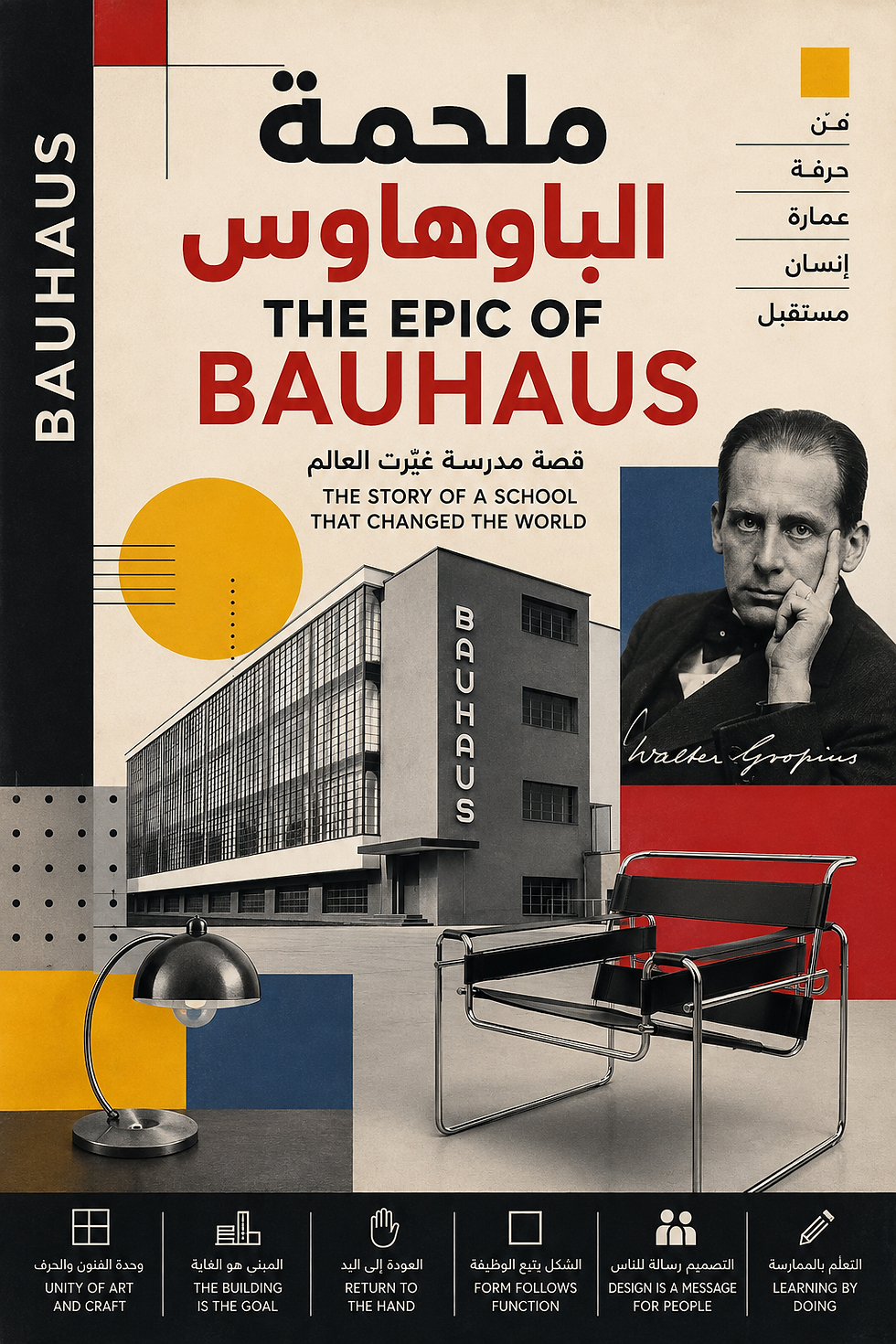
في عام 1919، كانت أوروبا رمادًا.In 1919, Europe was an empire of ashes.
انتهت الحرب، لكن الخراب بقي حيًّا.The war had ended, but destruction remained alive.
المدن مكسورة، والمصانع تبتلع الإنسان.Cities were broken, and factories consumed humanity.
الفنان ابتعد عن الحِرفة.The artist had abandoned the craft.
والحِرفة ابتعدت عن الفن.And craft had drifted away from art.
والعمارة فقدت سؤالها الأكبر.Architecture had lost its greatest question.
لمن نبني؟For whom do we build?
ولماذا نبني؟And why do we build?
ومن قلب هذا الرماد، وقف رجل.From the heart of those ashes, a man stood.
كان اسمه والتر غروبيوس.His name was Walter Gropius.
لم يحمل مطرقةً لهدم الماضي.He carried no hammer to destroy the past.
بل حمل فكرةً لبناء المستقبل.He carried an idea to build the future.
كتب بيانًا قصيرًا.He wrote a brief manifesto.
لكن الكلمات كانت أكبر من الورق.But its words were larger than paper.
كان ذلك بيان الباوهاوس.It was the Bauhaus Manifesto.
لم يكن إعلان مدرسة فقط.It was not merely a school declaration.
كان إعلان ولادة عصر جديد.It announced the birth of a new age.
القانون الأول: لا جدار بين الفن والحِرفة
THE FIRST LAW: NO WALL BETWEEN ART AND CRAFT
قال غروبيوس:Gropius declared:
لا ترفعوا الفنان فوق الحرفي.Do not place the artist above the craftsman.
فكلاهما يصنع العالم بيديه.Both create the world with their hands.
الرسم ليس جزيرة.Painting is not an island.
والنحت ليس مملكة منفصلة.Sculpture is not a separate kingdom.
والعمارة ليست عرشًا فوقهما.Architecture is not a throne above them.
النجّار يرسم بخشبه.The carpenter draws with wood.
والحدّاد ينحت بالنار.The metalworker sculpts with fire.
والنسّاج يبني فضاءً بالخيط.The weaver builds space with thread.
والمعماري يكتب بالضوء والحجر.The architect writes with light and stone.
كلها لغات لروح واحدة.They are languages of a single spirit.
وهنا وُلد القانون الأول.Here the first law was born.
وحدة الفنون والحِرف.The unity of art and craft.
لم يعد الفن معلقًا على الجدار.Art no longer merely hung on walls.
أصبح الجدار نفسه فنًّا.The wall itself became art.
القانون الثاني: المبنى هو القصيدة الكبرى
THE SECOND LAW: THE BUILDING IS THE GREAT POEM
قال غروبيوس:Gropius declared:
كل الطرق يجب أن تصل إلى البناء.All paths must ultimately reach the building.
فالمبنى ليس مجموعة جدران.A building is not a collection of walls.
إنه اجتماع الفنون في جسد واحد.It is the arts united in one body.
الكرسي بيت صغير للجسد.A chair is a small house for the body.
النافذة بيت للضوء.A window is a house for light.
الجدار ذاكرة للمكان.A wall is the memory of space.
والدرج حركة تحولت إلى حجر.A stair is movement transformed into stone.
أما الممر، فهو موسيقى الخطوات.A corridor is the music of footsteps.
لا معنى للجزء دون الكل.The fragment means nothing without the whole.
وفي ديساو، تحولت الفكرة إلى جسد.In Dessau, the idea became a body.
ظهر مبنى الباوهاوس عام 1926.The Bauhaus building appeared in 1926.
زجاج يمتد كأنه بلا نهاية.Glass stretched as if without end.
ورش تتصل بقاعات التعليم.Workshops flowed into classrooms.
الجدار لم يعد حاجزًا.The wall was no longer a barrier.
أصبح غشاءً يمرّ خلاله الضوء.It became a membrane for light.
كانت العمارة تتنفس.Architecture was breathing.
وكان المستقبل ينظر من خلف الزجاج.The future was looking through the glass.
القانون الثالث: اليد تفكر أيضًا
THE THIRD LAW: THE HAND ALSO THINKS
قال غروبيوس:Gropius declared:
لا تبدأ بالكتاب وحده.Do not begin with the book alone.
ابدأ بيدك.Begin with your hand.
المعرفة تسكن المطرقة.Knowledge lives inside the hammer.
وتختبئ في قطعة الخشب.It hides within a piece of wood.
وتظهر عندما يلين الطين.It appears when clay begins to yield.
وتشتعل عندما يلامس الحديد النار.It ignites when iron meets fire.
الفكر الذي لا تصنعه اليد ناقص.Thought untouched by the hand is incomplete.
واليد التي لا يقودها الفكر عمياء.And the hand without thought is blind.
حين يلتقي الاثنان يبدأ التصميم.When they meet, design begins.
ومن هذه الفلسفة خرج مارسيل بروير.From this philosophy emerged Marcel Breuer.
وظهر كرسي فاسيلي.And the Wassily Chair appeared.
أنابيب من الفولاذ.Tubes of steel.
فراغات أكثر من الكتلة.More emptiness than mass.
خفيف كأنه مرسوم في الهواء.Light as if drawn in air.
وصلب كإيقاع آلة.Strong as a machine's rhythm.
ثم جاءت ماريان برانت.Then came Marianne Brandt.
وحولت المعدن إلى ضوء.She transformed metal into light.
مصابيح بلا أقنعة زخرفية.Lamps without ornamental masks.
أشكال واضحة، صادقة، مباشرة.Forms that were clear, honest, direct.
الجمال لم يعد يختبئ.Beauty no longer needed to hide.
القانون الرابع: لا شيء بلا ضرورة
THE FOURTH LAW: NOTHING WITHOUT NECESSITY
سقطت الزخرفة عن عرشها.Ornament fell from its throne.
لم يعد الجمال يعني التكديس.Beauty no longer meant accumulation.
بل أصبح يعني الدقة.It came to mean precision.
كل خط يجب أن يعرف لماذا وُجد.Every line must know why it exists.
كل مادة يجب أن تقول حقيقتها.Every material must speak its truth.
لا تجعل الحجر يتظاهر بأنه خشب.Never make stone pretend to be wood.
ولا تجعل الحديد يخجل من معدنيته.Never make steel ashamed of being steel.
ولا تجعل المبنى يكذب.Never allow a building to lie.
الخط المستقيم أصبح موقفًا.The straight line became a position.
المربع أصبح نظامًا.The square became order.
الدائرة أصبحت اكتمالًا.The circle became wholeness.
والفراغ أصبح مادةً معمارية.And emptiness became architectural matter.
ثم جاء ميس فان دير روه.Then came Mies van der Rohe.
وحمل الاختزال إلى حدوده القصوى.He carried reduction to its extreme.
وفي فيلا توغندهات عام 1930،At Villa Tugendhat in 1930,
أصبح الزجاج لغةً للحرية.glass became a language of freedom.
وأصبح الفولاذ هيكلًا للصمت.Steel became the structure of silence.
واختفت الجدران أمام الفضاء.Walls surrendered before space.
حتى بدا البيت فكرةً شفافة.Until the house seemed a transparent idea.
الأقل هو الأكثر.Less is more.
لكن الأقل لم يكن فقرًا.But less was never poverty.
كان تركيزًا للحقيقة.It was the concentration of truth.
القانون الخامس: الجمال ليس امتيازًا
THE FIFTH LAW: BEAUTY IS NOT A PRIVILEGE
وهنا أصبحت الباوهاوس أكثر من أسلوب.Here Bauhaus became more than a style.
أصبحت موقفًا اجتماعيًا.It became a social position.
قالت إن التصميم ليس للأغنياء وحدهم.Design was not for the wealthy alone.
وإن الجمال ليس ملكًا للقصور.Beauty did not belong only to palaces.
كرسي العامل يستحق الجمال.The worker's chair deserves beauty.
مكتب المدرّس يستحق الجمال.The teacher's desk deserves beauty.
لعبة الطفل تستحق الجمال.A child's toy deserves beauty.
ومطبخ الأسرة يستحق الكرامة.A family's kitchen deserves dignity.
فالعمارة التي تنسى الإنسان،Architecture that forgets humanity,
ليست سوى هندسة بلا روح.is merely construction without a soul.
والتصميم الذي لا يخدم الحياة،Design that does not serve life,
ليس سوى شكل يبحث عن مبرر.is merely form searching for an excuse.
كان السؤال بسيطًا وخطيرًا:The question was simple and dangerous:
هل يمكن للجمال أن يصبح حقًا؟Can beauty become a right?
وكان جواب الباوهاوس: نعم.The Bauhaus answered: yes.
القانون السادس: المدرسة ليست قاعة
THE SIXTH LAW: A SCHOOL IS NOT A CLASSROOM
قالت الباوهاوس للطالب:The Bauhaus told the student:
لا تنتظر أن نعطيك الحقيقة.Do not wait for us to give you truth.
اكتشفها.Discover it.
المس اللون.Touch color.
اختبر المادة.Test material.
اكسر الشكل.Break the form.
أعد بناءه.Build it again.
راقب الضوء.Observe light.
افهم الظل.Understand shadow.
دع الخط يعلّم عينك.Let the line educate your eye.
ودع المادة تقاوم يدك.Let material resist your hand.
لأن المقاومة جزء من المعرفة.Because resistance is part of knowledge.
وهكذا أصبح التعليم مختبرًا.Education became a laboratory.
وأصبحت الورشة كتابًا مفتوحًا.The workshop became an open book.
ومن هذه الروح امتد الأثر.From this spirit, the influence spread.
إلى التصميم الصناعي.Into industrial design.
إلى التعليم الحديث للتصميم.Into modern design education.
إلى التفكير بالإنسان والمادة والوظيفة.Into thinking about people, material, and function.
لقد انتهت المدرسة.The school eventually ended.
لكن الفكرة رفضت أن تموت.But the idea refused to die.
حين خافت السلطة من مدرسة
WHEN POWER FEARED A SCHOOL
لم تكن قصة الباوهاوس انتصارًا فقط.The Bauhaus story was not only triumph.
كانت أيضًا قصة مطاردة.It was also a story of persecution.
انتقلت من فايمار إلى ديساو.It moved from Weimar to Dessau.
ومن ديساو إلى برلين.And from Dessau to Berlin.
ثم جاء النازيون.Then the Nazis came.
نظروا إلى المدرسة بريبة.They regarded the school with suspicion.
كانت أفكارها أكثر حرية مما يحتملون.Its ideas were freer than they could tolerate.
وفي عام 1933 أُغلقت الباوهاوس.In 1933, the Bauhaus was closed.
ظنت السلطة أنها أغلقت مدرسة.Power believed it had closed a school.
لكنها ارتكبت خطأً تاريخيًا.But it made a historic mistake.
لقد فتحت أبواب العالم لطلابها.It opened the world's doors to its students.
تفرّق الأساتذة والمصممون.Teachers and designers scattered abroad.
وحملوا الباوهاوس معهم.And they carried the Bauhaus with them.
عبرت الفكرة المحيط.The idea crossed the ocean.
دخلت الجامعات.It entered universities.
دخلت المصانع.It entered factories.
دخلت المدن الحديثة.It entered modern cities.
وهكذا حدثت المفارقة الكبرى.And then came the great paradox.
أُغلقت الباوهاوس في ألمانيا.The Bauhaus was closed in Germany.
فأصبحت مدرسةً للعالم.And became a school for the world.
ملحمة من زجاج وفولاذ
AN EPIC OF GLASS AND STEEL
هكذا لم يكن بيان الباوهاوس ورقة.Thus, the Bauhaus Manifesto was never merely paper.
كان شرارةً في تاريخ التصميم.It was a spark in the history of design.
وحدة الفنون والحِرف.The unity of art and craft.
البناء بوصفه العمل الكلي.Building as the total work.
العودة إلى اليد والمادة.The return to hand and material.
البساطة بدل الزخرفة الفارغة.Simplicity instead of empty ornament.
التصميم في خدمة الإنسان.Design in the service of humanity.
والتعليم بالتجربة والممارسة.And education through experiment and practice.
ومن تلك المبادئ خرج عالم جديد.From those principles emerged a new world.
مبنى الباوهاوس في ديساو.The Bauhaus Building in Dessau.
رئة ضخمة من الزجاج.A vast lung made of glass.
كرسي فاسيلي.The Wassily Chair.
خط من الفولاذ يحمل الإنسان.A line of steel carrying the human body.
مصابيح ماريان برانت.Marianne Brandt's lamps.
ضوء تحرر من الزخرفة.Light liberated from ornament.
فيلا توغندهات.Villa Tugendhat.
فضاء يكاد يهزم الجدار.Space almost defeating the wall.
وبعد أكثر من قرن
MORE THAN A CENTURY LATER
مات كثيرون ممن صنعوا الباوهاوس.Many who created the Bauhaus are gone.
تغيّرت الدول.Nations changed.
انهارت أنظمة.Regimes collapsed.
ظهرت مواد جديدة.New materials appeared.
وأصبحت الآلة رقمية.The machine became digital.
لكن السؤال بقي.But the question remained.
ماذا يجب أن يفعل التصميم؟What should design do?
هل يزيّن العالم؟Should it decorate the world?
أم يعيد تنظيمه؟Or should it reorganize it?
هل يخدم السوق؟Should it serve the market?
أم يخدم الإنسان؟Or should it serve humanity?
هل المعماري صانع أشكال؟Is the architect merely a maker of forms?
أم صانع طريقة جديدة للحياة؟Or a maker of new ways of living?
هنا ما زالت الباوهاوس حيّة.Here, the Bauhaus remains alive.
في الكرسي الذي حذف الزائد.In the chair that removed the unnecessary.
في النافذة التي حررت الضوء.In the window that liberated light.
في المدرسة التي جعلت اليد تفكر.In the school that taught the hand to think.
وفي المعماري الذي يسأل قبل أن يرسم.In the architect who questions before drawing.
بعد أكثر من قرن،More than a century later,
ما زال غروبيوس يهمس من فايمار:Gropius still whispers from Weimar:
لا تفصلوا الفن عن الحياة.Do not separate art from life.
ولا تفصلوا اليد عن العقل.Do not separate the hand from the mind.
ولا تجعلوا العمارة تمثالًا للمعماري.Do not make architecture a monument to the architect.
اجعلوها بيتًا للإنسان.Make it a home for humanity.
لأن أعظم مبنى،Because the greatest building,
ليس الذي يدهش العين فقط.is not merely the one that astonishes the eye.
بل الذي يغيّر طريقة عيشنا.It is the one that changes how we live.
وهذه كانت ثورة الباوهاوس.This was the Bauhaus revolution.
لم تغيّر شكل المبنى فقط.It did not merely change the building.
لقد غيّرت معنى التصميم نفسه.It changed the meaning of design itself.
لم تبنِ الباوهاوس مدرسةً فقط.The Bauhaus did not merely build a school.
لقد حاولت أن تعيد تصميم الإنسان والعالم.It attempted to redesign humanity and the world.


Comments