
وجه الحرب Dalí’s “The Face of War” (1940),
- IMAD DAROUICH

- Jul 7
- 7 min read
وجه الحرب
The Face of War
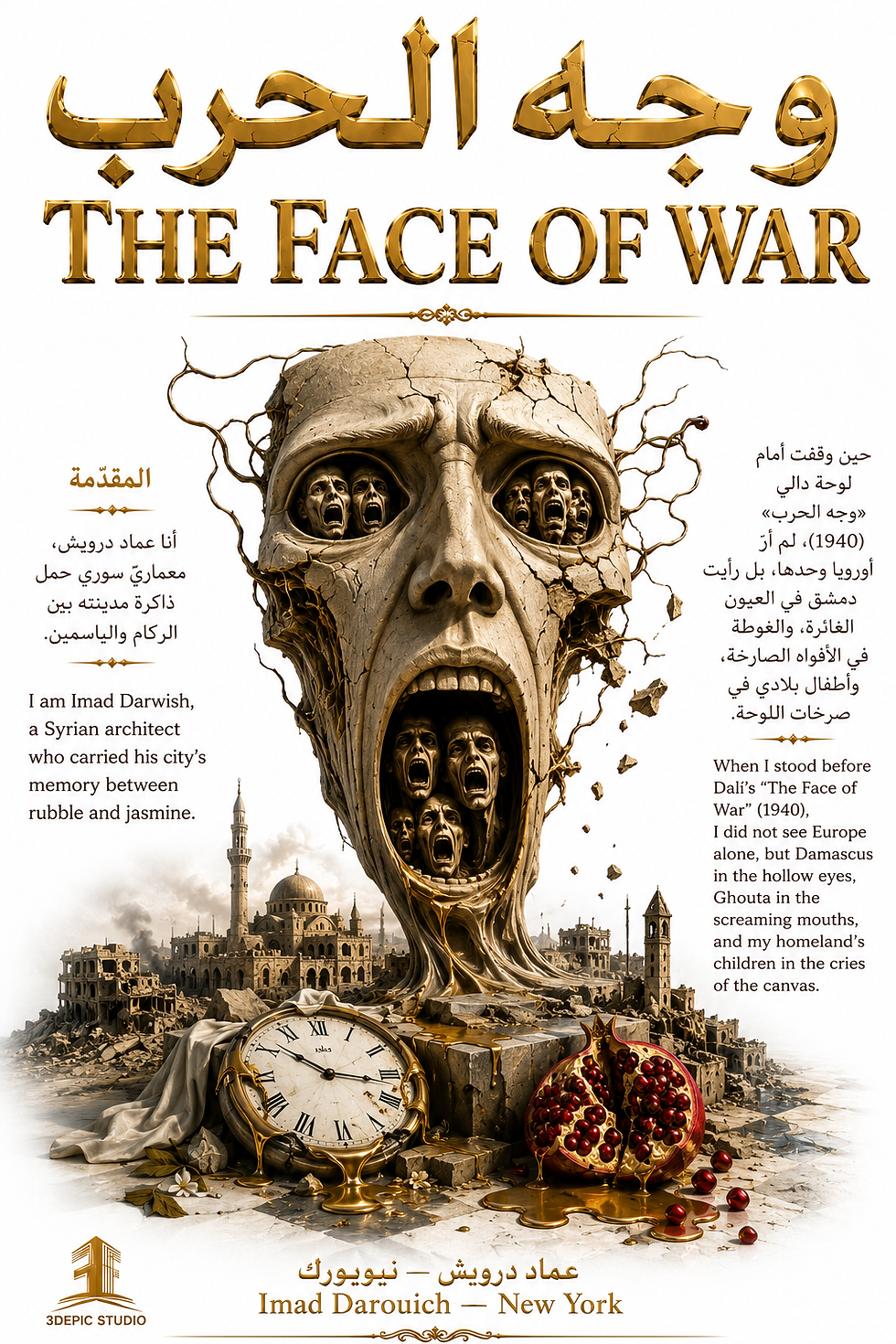
المقدّمة
أنا عماد درويش، معماريّ سوري
حمل ذاكرة مدينته بين الركام والياسمين. I am Imad Darwish, a Syrian architect who carried his city’s memory between rubble and jasmine.
حين وقفت أمام لوحة دالي «وجه الحرب» (1940)،
لم أرَ أوروبا وحدها، بل رأيت دمشق في العيون الغائرة، والغوطة في الأفواه الصارخة،
وأطفال بلادي في صرخات اللوحة. When I stood before Dalí’s “The Face of War” (1940),
I did not see Europe alone, but Damascus in the hollow eyes,
Ghouta in the screaming mouths, and my homeland’s children in the cries of the canvas.
هذه الملحمة ليست وصفًا للوحة فقط، بل شهادة شخصية: الحرب تذيب كل شيء، لكن الذاكرة تقف أقوى من الرعب، وأعمق من الخراب. This epic is not merely a description of the painting, but a personal testimony: war melts everything, yet memory stands stronger than terror, and deeper than ruin.
«وجه الحرب»
رأيتُ وجهًا جافًا يتدلّى من صحراء بلا ظل. I saw a dry face hanging from a desert without shade.
عينان غائرتان تبتلعان العالم. Two hollow eyes swallowing the world.
في كل عينٍ وجه. In each eye, a face.
وفي كل وجهٍ فمٌ مفتوح على صراخٍ لا ينتهي. And in each face, a mouth open to an endless scream.
الثعابين تلتفّ حول الجمجمة مثل زمنٍ خانق. Serpents coil around the skull like a suffocating time.
تتلوّى كخيوط سمٍّ قديم لا دواء له. They writhe like threads of an old poison without cure.
لون الأرض أصفرُ كالعطش. The ground is yellow like thirst.
كغبارٍ دمشقيٍّ بعد قصفٍ مفاجئ. Like Damascene dust after a sudden shelling.
هذا ليس وجهًا عابرًا. This is not a passing face.
إنه وجه الحرب نفسها، الوجه الذي لا يشيخ. It is war’s own face, the face that does not age.
رسمه دالي سنة 1940 وهو بعيدٌ عن الجبهات، في كاليفورنيا. Dalí painted it in 1940, far from the front lines, in California.
العالم يحترق كعود ثقابٍ أطول من القارات. While the world burned like a matchstick longer than continents.
لوحة صغيرة، لكنها أثقل من مدن. A small painting, yet heavier than cities.
تستقرّ اليوم في متحفٍ بعيد، وتستقرّ أكثر في صدري. It rests today in a distant museum, and rests even more in my chest.
أنا عماد درويش، أقف أمامها كشاهدٍ خرج من تحت الركام. I, Imad Darwish, stand before it as a witness emerging from the rubble.
إقرأ في كل فمٍ مفتوح اسمًا سوريًا. I read a Syrian name in every open mouth.
أُميّز في كل عينٍ ملامح الغوطة. I discern the features of Ghouta in every eye.
هذه ليست أوروبا وحدها. This is not Europe alone.
هذا وجهي، وهذا وجه مدينتي. This is my face, and this is my city’s face.
الصحراء ساكنة… لكن السكون نفسه يصرخ. The desert is still… yet stillness itself screams.
لا شجر، لا ماء، لا ظلّ، بل فراغ يتّسع للرعب. No trees, no water, no shade, only a void wide enough for terror.
الثعابين ليست زينة. The serpents are not ornaments.
إنها زمن الحرب يلتفّ على الرأس ويقطع النفس. They are war-time coiling around the head, cutting the breath.
أتذكّر دمشق. I remember Damascus.
الوجوه التي كانت تمرّ في الشوارع كظلالٍ شاحبة. Faces that passed through the streets like pale shadows.
في كل عينٍ مدينةٌ منهكة. In each eye, an exhausted city.
وفي كل فمٍ جوعٌ ينهش الهواء. And in each mouth, a hunger that gnaws at the air.
دالي لم يرَ سورية، لكنه رسمها وهو يرسم العالم. Dalí never saw Syria, yet he painted her while painting the world.
رأى أن الحرب تتكرّر بوجهٍ واحدٍ لا ينتهي. He saw that war repeats with a single face that never ends.
عينٌ تلد وجهًا. An eye gives birth to a face.
ووجهٌ يلد فمًا. And a face gives birth to a mouth.
وفمٌ يلد صرخةً أعمق من اللغة. And a mouth gives birth to a scream deeper than language.
طفولتي تتصاعد من الطلاء. My childhood rises from the paint.
ساعة الحائط في بيتنا القديم… قلبٌ غريبٌ يدقّ خارج صدورنا. The wall clock in our old house… a strange heart beating outside our chests.
كنت أخاف من عيونها السوداء. I feared its black eyes.
اليوم أفهم: كانت تدرّبني على الإصغاء إلى نبض الذاكرة. Today I understand: it was training me to listen to the memory's pulse.
في الغوطة لعبتُ بين الرمان والتين. In Ghouta I played among pomegranates and figs.
كانت الأرض رطبة، والسماء منخفضة، والعطر يملأ صدري. The earth was moist, the sky low, and the fragrance filled my chest.
ثم جاء زمنٌ آخر. Then another time came.
وجوه قليلة، جدران كثيرة، صمت أكثر. Fewer faces, more walls, even more silence.
أطفال يبكون بلا دموع، كأن الحرب سرقت الماء من أعينهم. Children crying without tears, as if war stole the water from their eyes.
أنا معماريّ القلب. I am an architect at heart.
أعرف أن الحجر يحتفظ بالأسماء. I know that stone preserves names.
وأن القباب تحفظ الدعاء، والمآذن تحفظ النداء. And that domes preserve prayers, minarets preserve the call.
لكن الحرب لا تحفظ شيئًا. But war preserves nothing.
أنها تمحو: تمحو الوجوه والبيوت والسلالات. It erases: erases faces, houses, lineages.
ومع ذلك… هناك نافذةٌ صغيرة في آخر الصحراء. And yet… There is a small window at the far edge of the desert.
لا تُرى من النظرة الأولى. It isn’t visible at first glance.
لكنها تنتظر من يقترب أكثر. But it waits for whoever comes closer.
يلمع ضوءٌ خافت كأنه وعدٌ سرّي. A faint light glimmers as if it were a secret promise.
يولد ظلٌّ أخضر بالكاد يُرى. A green shadow is barely born.
ظلّ نبتةٍ تتحدّى القفر وتفتح فمها للندى. The shadow of a plant defying barrenness, opening its mouth to the dew.
وجه الحرب ليس مطلقًا. The Face of War is not absolute.
هو قناعٌ هشّ، زجاجٌ قديم يتشقق تحت أصابع الوقت. It is a fragile mask, old glass cracking under the fingers of time.
حتى الجمجمة تعرف الذوبان. Even the skull knows how to melt.
مثل شمع شمعةٍ تُركت في حرٍّ طويل. Like the wax of a candle left in a long heat.
حتى الثعابين تموت بعد سمّها. Even the serpents die after their venom.
تتحجّرُ جلودُها، وتنتظر الأرضُ المطر. Their skins petrify, and the earth waits for rain.
أستعيد رائحة الغوطة مساءً. I recall Ghouta’s evening scent.
ياسمينٌ يخرج من الشقوق ويقول: أنا هنا، ما زلتُ أتنفّس. Jasmine grows from cracks saying: I am here, I still breathe.
دمشق لا تموت بسهولة. Damascus does not die easily.
مرّ عليها الرومان، ومرّ المغول، ومرّ الاستعمار… ورحلت وجوههم. Romans passed, Mongols passed, colonizers passed… their faces departed.
وبقي وجه المدينة. And the city’s face remained.
وجهٌ أعمق من الحرب وأوسع من خرائبها. A face deeper than war and wider than its ruins.
ذاكرتها تمتدّ في الماء والقباب والأبواب. Her memory stretches through water, domes, and doors.
البيت الدمشقيّ يعرف السرّ: باحةٌ في الوسط، وماء، وسماء. The Damascene house knows the secret: a courtyard at the center, water, and sky.
ينهض بعد كلّ دمار ككائنٍ يرمّم ذاته بنفسه. It rises after every destruction like a being restoring itself.
الأسواق تسقط… فتقوم أسواقٌ جديدة. Markets fall… new markets rise.
النقوش تبقى ولو سقط الجدار. Engravings remain even if the wall falls.
اسمُ المكان يحرس نفسه بالذاكرة. A place’s name guards itself with memory.
الفنّ صلاةٌ ترفع الملامح من تحت التراب. Art is a prayer lifting features from beneath the earth.
كلّما صرخت الحرب، ردّت المدينة بنغمة. Whenever war screamed, the city answered with a note.
كلّما محَت وجهًا، رسمت اليدُ وجهًا جديدًا. Whenever it erased a face, a hand drew a new one.
الحرب تغيّرُ الأسلحة، لكنها لا تغيّر وجهها. War changes weapons, but does not change its face.
الوجه يتكرّر كالكابوس، ثم يتلاشى كالدخان. The face repeats like a nightmare, then fades like smoke.
وراء التفتّت، شيءٌ آخر ينهض. Behind the crumbling, something else rises.
أرى جناحين يخرجان من الرماد. I see two wings rising from ash.
دمشق طائرُ فينيقٍ يفتح ريشه وسط الخراب. Damascus is a phoenix opening its plumage amid the ruin.
كلُّ ريشةٍ لهبٌ، لكن اللهب ولادةٌ لا موت. Each feather is flame, but the flame is birth, not death.
من كل فمٍ يصرخ يخرج لحن. From every screaming mouth emerges a melody.
ومن كلّ عينٍ غائرةٍ ينفجر نور. And from every hollow eye bursts forth light.
اللوحة كانت إنذارًا… وأنا أقرأها كتابَ قيامة. The painting was a warning… and I read it as a book of resurrection.
وجه الحرب يهدّد، لكنّه لا يحكم المستقبل. The Face of War threatens, but it does not rule the future.
دمشق تغسل وجهها بالنهر. Damascus washes her face in the river.
والغوطة تعيد زرع أشجارها. And Ghouta replants her trees.
والأطفال الذين صرخوا اليوم… سيضحكون غدًا. And the children who screamed today… will laugh tomorrow.
ضحكاتهم تملأ العيونَ الفارغة في اللوحة. Their laughter fills the hollow eyes in the painting.
والأفواه التي تكرّرت بلا نهاية تغنّي قصائد حبّ. And the mouths that repeated endlessly sing poems of love.
دمشق مدينةُ وجوهٍ لا تُحصى. Damascus is a city of countless faces.
تسقط تحت سيف الغزاة، ثم تنهض كحديقةٍ من حجارة. She falls beneath invaders’ swords, then rises like a garden of stones.
كلُّ شارعٍ جرحٌ، وكلُّ جرحٍ نافذةٌ للضوء. Every street is a wound, and every wound a window to light.
خلف كلّ تشقّقٍ بذرةُ ياسمينٍ مستكينة. Behind every crack rests a jasmine seed.
هذه المدينة ليست مكانًا فحسب، إنها ذاكرةُ أمةٍ وروحُ قرون. This city is not just a place; it is a nation’s memory and the soul of centuries.
الحرب تحاول ابتلاعها، لكنها تردّ بوجهٍ آخر. War tries to devour her, but she responds with another face.
وجهٌ مليءٌ بالعطر، بالحبّ، بالصلابة. A face filled with fragrance, love, and resilience.
وجهٌ يقول للعالم: أنا هنا… وسأبقى. A face that tells the world: I am here… and I will remain.
أقفُ أخيرًا أمام اللوحة، أسمع صرخاتها ولا أخاف. At last I stand before the painting, hearing its screams without fear.
لقد فهمتُ الرسالة: وجهُ الحرب امتحانٌ للذاكرة. I have understood the message: the Face of War is a test of memory.
إمّا أن ننسى فنُهزم، أو نتذكّر فننتصر. Either we forget and are defeated, or we remember and prevail.
أحملُ وجهي السوريّ في هذه المرآة. I carry my Syrian face in this mirror.
أرى الغوطة في عينيها، وأطفال دمشق في أفواهها. I see Ghouta in its eyes, and the children of Damascus in its mouths.
لكنني أرى أيضًا زهرةً تولد من الصراخ. But I also see a flower born from the scream.
مدينةً تنهض من النار كما ينهض الحلم من الأرق. A city rising from fire as a dream rises from insomnia.
هذا هو وجهي الحقيقي… وجهُ الذاكرة التي لا تُهزم. This is my true face… the face of memory that cannot be defeated.
تنتهي اللوحة هنا، لا على جدار المتحف البعيد، بل في قلبي. The painting ends here, not on the distant museum wall, but in my heart.
تنتهي في دمشق، وتبدأ من جديد. It ends in Damascus, and begins again.


Comments