
The Epic of the Rock of Ghouta Dr. Salim Namour ملحمة صخر الغوطة – الدكتور سليم نمور
- IMAD DAROUICH

- Mar 14
- 6 min read
ملحمة صخر الغوطة
الدكتور سليم نمور
The Epic of the Rock of Ghouta
Dr. Salim Namour

إلى أرواح أطفال الغوطة الذين لم يتعلموا بعد كيف يقولون كلمة "حياة".
To the souls of the children of Ghouta who had not yet learned how to say the word “life.”
إلى الأطباء الذين وقفوا بين الإنسان والموت بينما كان العالم يتردد في النظر.
To the doctors who stood between humanity and death while the world hesitated to look.
إلى كل جراحٍ عمل تحت الأرض بينما كانت السماء تمطر نارًا.
To every surgeon who worked underground while the sky rained fire.
إلى أولئك الذين حملوا القسم الطبي كأنه عهد أخلاقي لا يمكن خيانته.
To those who carried the medical oath as a moral covenant that could never be betrayed.
إلى مدينة دمشق التي علمتنا أن الحضارة يمكن أن تنزف لكنها لا تموت.
To the city of Damascus that taught us civilization can bleed but it never dies.
وإلى الغوطة…
And to Ghouta…
الأرض التي تحولت في زمن الحرب إلى امتحانٍ لضمير العالم.
The land that became, in wartime, a test for the conscience of the world.
هذه الصفحات ليست مجرد كلمات.
These pages are not merely words.
بل محاولة صغيرة لحفظ ذاكرة كبيرة.
They are a small attempt to preserve a great memory.
عماد درويش
Imad Darouich
هناك لحظات في التاريخ يصبح فيها الإنسان شاهدًا على نفسه.
There are moments in history when humanity becomes a witness to itself.
لحظات تختفي فيها الحدود بين الطب والحرب.
Moments when the boundaries between medicine and war disappear.
بين الحياة والموت.
Between life and death.
وبين الصمت والحقيقة.
Between silence and truth.
في تلك اللحظات يولد نوع نادر من البشر.
In such moments, a rare kind of human being emerges.
أطباء لا يعالجون الجراح فقط.
Doctors who do not merely treat wounds.
بل يحملون ذاكرة الألم إلى العالم.
But carry the memory of suffering to the world.
الغوطة الشرقية كانت واحدة من تلك اللحظات في التاريخ.
Eastern Ghouta was one of those moments in history.
مدينة تحولت إلى غرفة عمليات كبيرة تحت السماء.
A city that became a vast operating room beneath the sky.
وكان أحد أطبائها يقف في قلب تلك العاصفة.
And one of its doctors stood at
the center of that storm.
الدكتور سليم نمور.
Dr. Salim Namour.
لم يكن مجرد جراح يعمل في زمن الحرب.
He was not merely a surgeon working in wartime.
بل شاهدًا على عصرٍ حاول فيه الموت أن يصبح نظامًا للحياة.
He was a witness to an era in which death tried to become a system of life.
ومن بين أنقاض الغوطة خرجت قصة طبيب.
From the ruins of Ghouta emerged the story of a doctor.
قصة صمود.
A story of resilience.
قصة ضمير.
A story of conscience.
وقصة إنسان قرر أن الحقيقة أهم من الخوف.
And the story of a man who decided that truth was greater than fear.
هذه ليست سيرة طبيب فقط.
This is not merely the biography of a doctor.
بل ملحمة إنسانية عن الطب حين يواجه الحرب.
It is a human epic about medicine confronting war.
وعن الإنسان حين يرفض أن يخسر إنسانيته.
And about humanity refusing to lose its humanity.
عماد درويش Imad Darouich New York
ملحمة صخر الغوطة – الدكتور سليم نمور
The Epic of the Rock of Ghouta – Dr. Salim Namour
Imad Darouich — New York 3DEPICS Contemporary Epics
مقدمة Introduction
أكتب هذه الكلمات عن الدكتور سليم نمور لا بصفتي كاتبًا فقط، بل بصفتي ابنًا من أبناء الغوطة يعرف هذه الأرض ويعرف رجالها.
I write these words about Dr. Salim Namour not only as a writer, but as a son of Ghouta who knows this land and its men.
فالغوطة لم تكن في تلك السنوات مجرد جغرافيا محاصرة.
In those years, Ghouta
was not merely a besieged geography.
كانت امتحانًا للضمير الإنساني كله.
It was a test of the entire human conscience.
كانت مكانًا حاول فيه الموت أن يصبح نظامًا للحياة.
It was a place where death tried to become a system of life.
وفي ذلك الامتحان القاسي ظهر أطباء لم يحملوا سماعاتهم فقط.
In that harsh test, doctors emerged who carried more than their stethoscopes.
بل حملوا أرواح الناس بين أيديهم.
They carried the lives of people in their hands.
وكان الدكتور سليم نمور واحدًا من تلك الوجوه التي أصبحت جزءًا من ذاكرة الغوطة.
Dr. Salim Namour was one of those faces that became part of Ghouta’s memory.
لم يكن مجرد جراح.
He was not merely a surgeon.
بل شاهدًا على زمنٍ حاول فيه الظلم أن يختنق بالإنسان.
He was a witness to a time when oppression tried to suffocate humanity.
ولهذا أكتب هذه الملحمة تحيةً لتجربة إنسانية نادرة.
For this reason I write this epic as a tribute to a rare human experience.
كتبها طبيب تحت الأرض بينما كانت السماء تمطر نارًا.
Written by a doctor underground while the sky rained fire.
ملحمة صخر الغوطة The Epic of the Rock of Ghouta
في الغوطة الشرقية، حين ضاقت الأرض بالحصار وامتلأت السماء بالطائرات، بدأ زمن الأطباء الذين يقاومون بالمشرط.
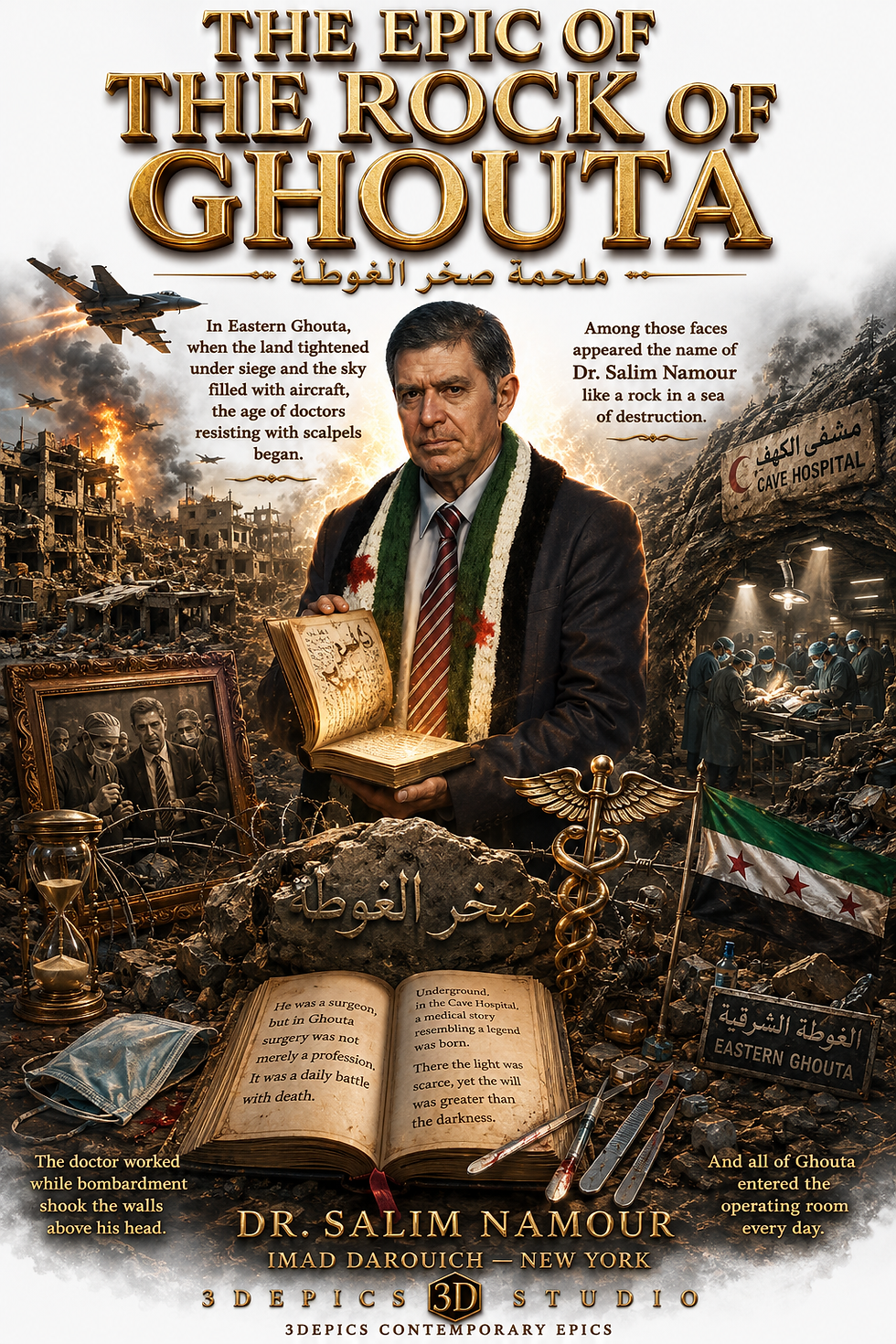
In Eastern Ghouta, when the land tightened under siege and the sky filled with aircraft, the age of doctors resisting with scalpels began.
ومن بين تلك الوجوه ظهر اسم الدكتور سليم نمور كصخرة في بحر من الدمار.
Among those faces appeared the name of Dr. Salim Namour like a rock in a sea of destruction.
كان جراحًا، لكن الجراحة في الغوطة لم تكن مجرد مهنة.
He was a surgeon, but in Ghouta surgery was not merely a profession.
كانت معركة يومية مع الموت.
It was a daily battle with death.
تحت الأرض، في مشفى الكهف، وُلدت حكاية طبية تشبه الأساطير.
Underground, in the Cave Hospital, a medical story resembling a legend was born.
كان الضوء قليلاً هناك، لكن الإرادة كانت أكبر من الظلام.
There the light was scarce, yet the will was greater than the darkness.
كان الطبيب يعمل بينما القصف يهز الجدران فوق رأسه.
The doctor worked while bombardment shook the walls above his head.
وكانت الغوطة كلها تدخل غرفة العمليات كل يوم.
And all of Ghouta entered the operating room every day.
كل جريح كان يحمل قصة.
Every wounded person carried a story.
وكل طفل كان يحمل مستقبلًا مهددًا.
Every child carried a threatened future.
وكل طبيب كان يحمل عبء أمة كاملة.
And every doctor carried the burden of an entire nation.
ثم جاء يوم الكيماوي.
Then came the day of the chemical attack.
اليوم الذي وصفه الأطباء بأنه أقرب ما يكون إلى يوم القيامة.
The day doctors described as the closest thing to the Day of Judgment.
لم يكن الناس يسقطون بسبب الشظايا.
People were not falling because of shrapnel.
بل بسبب الهواء نفسه.
But because of the air itself.
كان الأطفال يختنقون بلا دم.
Children were suffocating without blood.
وكان الأطباء يحاولون إنقاذ مدينة كاملة في ساعات قليلة.
Doctors were trying to save an entire city in a few hours.
هناك لم يكن الدكتور سليم طبيبًا فقط.
There Dr. Salim was not only a doctor.
بل شاهدًا يحمل الحقيقة للعالم.
He became a witness carrying truth to the world.
ومن شهادته خرجت وثائق أصبحت أدلة في المحافل الدولية.
From his testimony emerged documents that became evidence in international forums.
وهكذا تحولت سماعة الطبيب إلى صوتٍ للعدالة.
Thus the doctor’s stethoscope turned into a voice for justice.
بعد تهجير الغوطة بدأت مرحلة أخرى من الحكاية.
After the displacement of Ghouta, another chapter of the story began.
انتقل الطبيب من غرف العمليات تحت الأرض إلى قاعات العدالة الدولية.
The doctor
moved from underground operating rooms to halls of international justice.
لم يعد يحمل المشرط فقط.
He no longer carried only a scalpel.
بل حمل الحقيقة.
He carried the truth.
ومن تلك اللحظة أصبح صوته صوتًا لضحايا لا يستطيعون الكلام.
From that moment his voice became the voice of victims who could no longer speak.
في المؤتمرات الدولية.
In international conferences.
وفي لجان التحقيق.
In investigative committees.
وفي كل مكان يبحث فيه العالم عن الحقيقة.
And wherever the world searches for truth.
بعض الرجال يشبهون الأشجار.
Some men resemble trees.
ينمون في أرضهم ويبقون فيها.
They grow in their land and remain there.
لكن بعض الرجال يشبهون الصخور.
But some resemble rocks.
تبقى ثابتة حتى عندما تتحرك الأرض حولها.
They remain firm even when the earth moves around them.
ولهذا أصبح الدكتور سليم في ذاكرة الغوطة
That is why in the memory of Ghouta Dr. Salim became
صخر الغوطة. The Rock of Ghouta.
خاتمة
Conclusion
التاريخ لا يكتبه الجنرالات وحدهم.
History is not written by generals alone.
بل يكتبه أيضًا الأطباء الذين يقفون بين الحياة والموت.
It is also written by doctors who stand between life and death.
وفي قصة الغوطة سيبقى اسم الدكتور سليم نمور جزءًا من ذاكرة الأرض.
In the story of Ghouta, the name of Dr. Salim Namour will remain part of the memory of the land.
ذاكرة تقول للعالم إن الحقيقة قد تتأخر.
A memory telling the world that truth may be delayed.
لكنها لا تموت.
But it never dies.
فالرجال الصادقون يشبهون الينابيع.
Sincere men are like springs.
قد يبتعدون عن الأرض التي خرجوا منها.
They may leave the land from
which they emerged.
لكن ماءهم يبقى فيها.
Yet their water remains within it.
والغوطة تعرف أبناءها.
And Ghouta knows its sons.
وتحفظ أسماءهم في ذاكرة ترابها.
And preserves their names in the memory of its soil.
Imad Darouich — New York 3DEPICS Contemporary Epics


Comments